
Product overview
How you build a self-developing organization.
From your first diagnostic to changes that run on their own.
Development over time
01 — Sense
Diagnose your organization.
Four data sources build a continuous picture of how your organization works. Your first results are ready in minutes.
Maturity Assessment
Where your organization stands across Mindset, Behavior, Culture, and Systems.
- Directive
- Rule-based
- Merit-based
- Participatory
Hover to explore
Overall
Rule-based · Structure · Consistency
2.4
Hover any dimension to explore what each stage means.
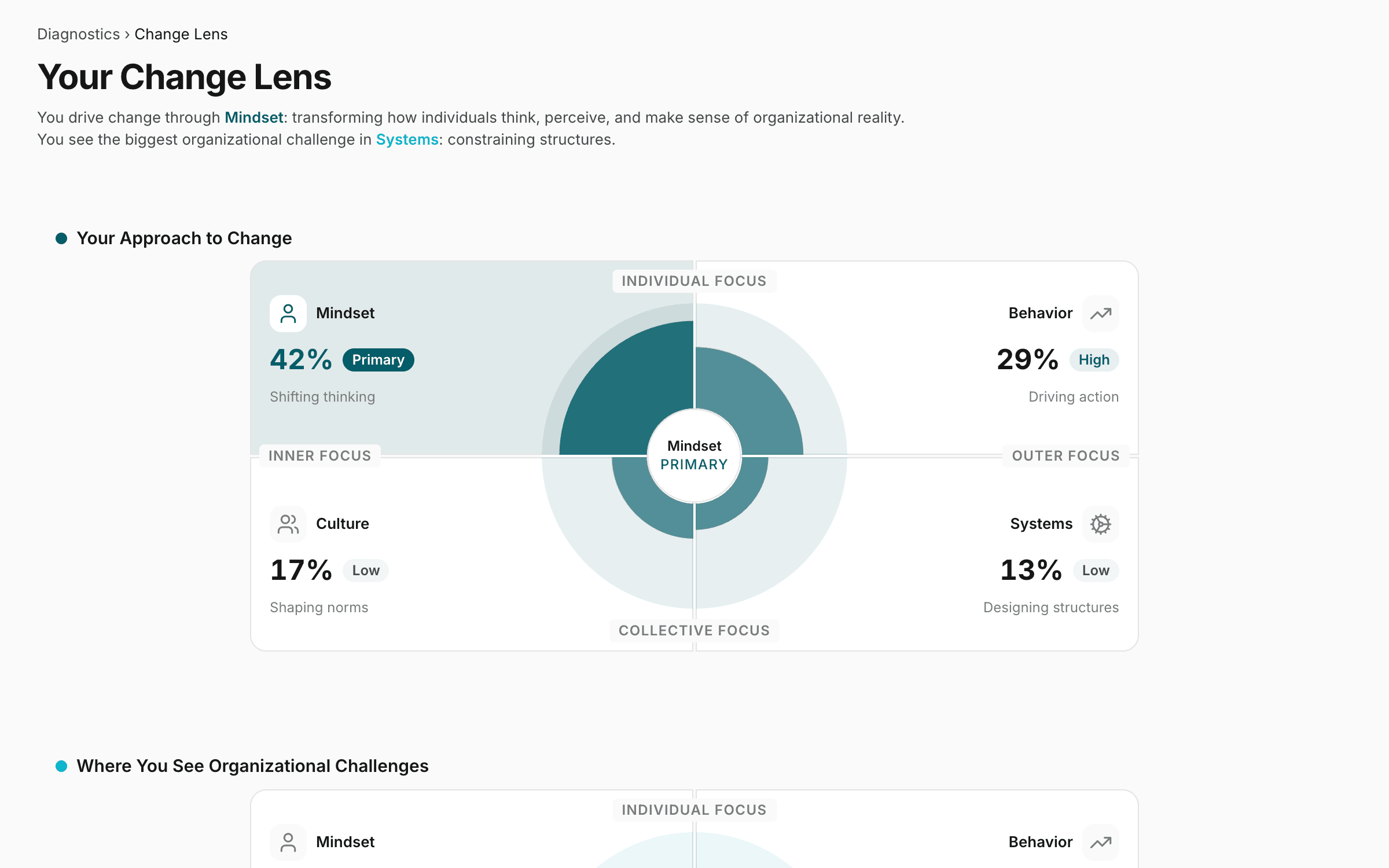
Change Lens
How your team approaches change, across four quadrants.
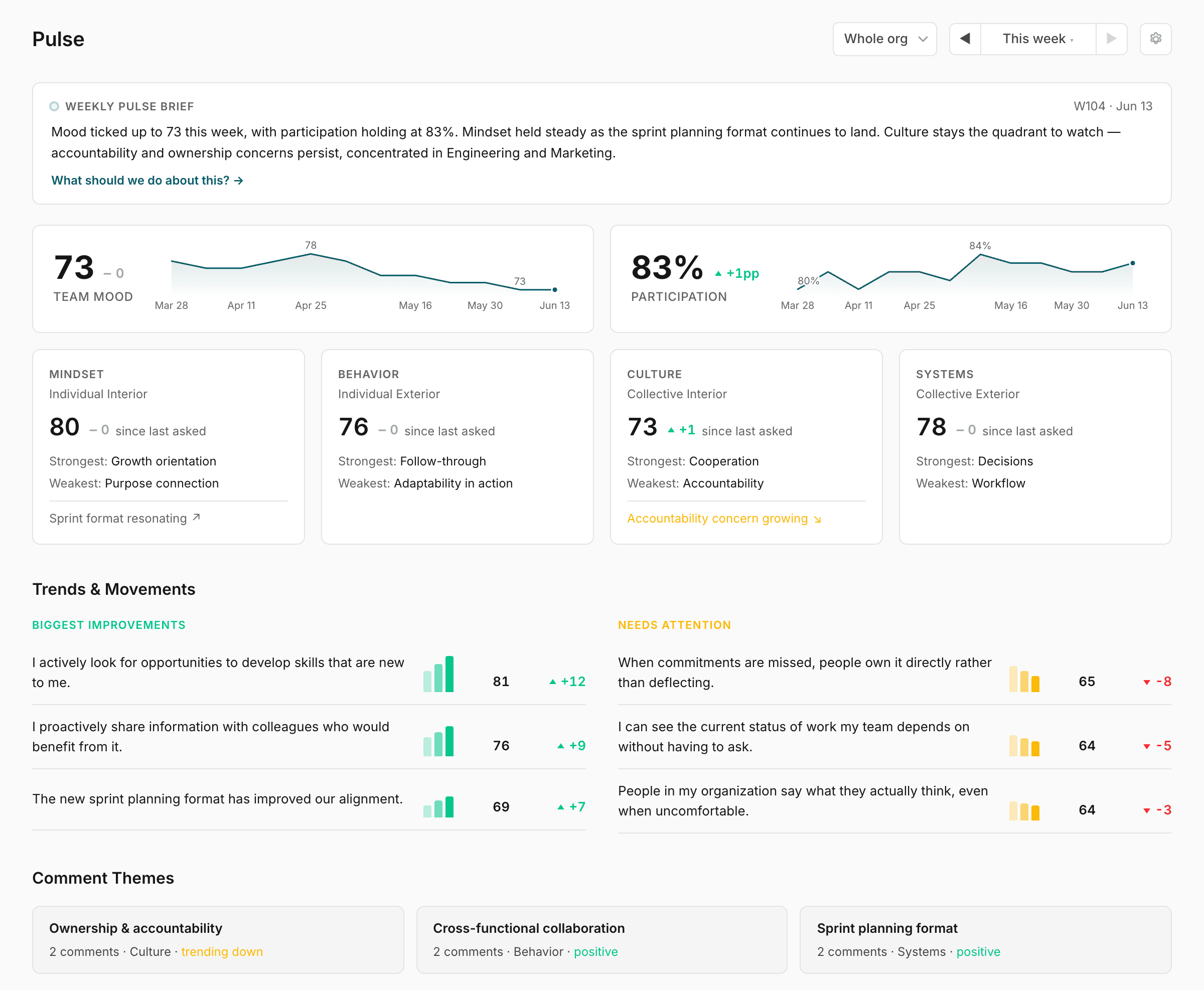
Pulse
3–5 questions per week. How people experience the organization, updated continuously.
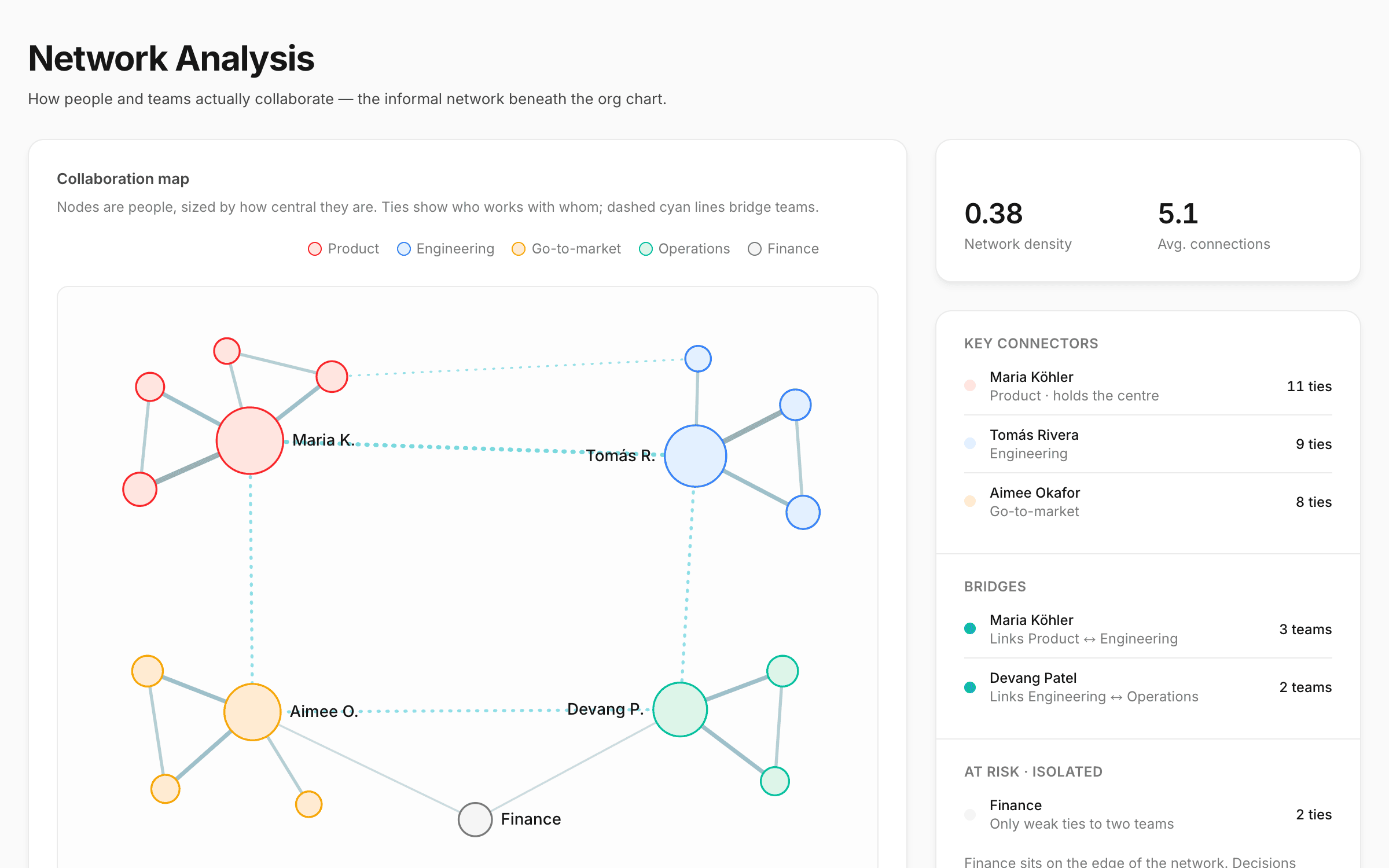
Network Analysis
How information and decisions actually flow across your organization.
The picture updates every week. Your leadership team always works from current data.
02 — Shape
Find the changes with the greatest effect.
The intelligence layer analyzes the diagnostic data and surfaces the 3–5 changes that will have the greatest effect, in the right order. Recommendations are specific: what to change, where in the organization, and why this matters more than everything else competing for attention. They update as your organization develops.
Prioritized recommendations
The 3–5 highest-impact changes, ranked and explained.
Impact analysis
See the projected effect of each change before you commit.
03 — Make it stick
Change how your teams work.
Applied Integral gives your teams the operational tools to make development practical: decision-making workflows to run, governance structures to operate, and collaboration patterns that become part of how work gets done.
Decision workflows
Run structured decision-making processes across teams.
Organization design
Design and evolve organizational structures as priorities shift.
Governance
Accountability mechanisms for cross-functional development work.
Goal tracking
Connect strategic objectives to the development work driving them.
Development shows up in how teams operate. Week after week, the way work gets done evolves.
What changes
You always know where you stand.
The diagnostic updates every week. No more working from a picture that aged before anyone read it.
Your team aligns around evidence.
When priorities come from data, the leadership team spends less time debating what to focus on and more time acting.
Changes become part of daily operations.
Development shows up in how teams decide, coordinate, and run their week.
When you understand how your organization really works, you make different decisions. The reorganization you were planning might not be the answer. The real problem might be something you've never had a way to see.
I used to walk into the leadership meeting with a gut feeling about what needed to change. Now I walk in with a picture of the whole organization. The debates about what to prioritize got a lot shorter.
We had survey data, consultant reports, and OKR dashboards. None of them showed us why the strategy wasn't moving. Applied Integral connected the pieces. Within a month, our leadership team could see exactly where the organization was stuck and what to do about it.
Start with the diagnostic
See what Applied Integral finds.
Start the diagnostic preview and see what it surfaces about your organization.
Or email us at hello@appliedintegral.com