01 · Work
Work crosses functions.
AI integration, customer journeys, data products, regulatory and sustainability work. None of it sits in one department. None of it waits for the annual plan.

The company has a new job.
Get a maturity analysis that grows with your organization and shows the next step it’s ready to take. Give your teams the tools to decide, collaborate, and govern in new, more effective ways, so each step builds your organization’s ability to develop from within.
The shift
How the organization works determines whether the strategy lands.
Set direction, run the operation, bring in help when something needs to change.
Build how the company decides, collaborates, and runs itself.
Why now
The most valuable work now crosses departments and changes faster than any one team can handle.
01 · Work
AI integration, customer journeys, data products, regulatory and sustainability work. None of it sits in one department. None of it waits for the annual plan.
02 · Pace
Markets that gave you eighteen months to respond now give you ninety days.
03 · Cost
Slow decisions, unclear ownership, and change fatigue show up on the P&L every quarter.
The gap
Each one addresses a part of the organization. None shows how the parts connect or what to do next.
Move boxes, but leave how decisions get made and how teams work together untouched.
Measure how people feel but don't show what to do about it.
Diagnose deeply. The picture starts aging the day the engagement ends.
Track what should happen but not why the organization can't deliver on it yet.
The cost of the old job
Share of employees willing to support major change
of your strategy's value is lost between the plan and reality.
Mankins & Steele, HBRof capacity goes to organizational drag: work the company does dealing with itself.
Mankins & Garton, Bainmore change asked of the average employee than in 2016 — 2 to 10 planned changes a year.
Gartner / HBRThe size of the prize
additional revenue a year for a large enterprise growing at roughly twice its peers. Gartner
The new goal
Same leaders. Same structure. A company that can sense where it's stuck, decide what to develop next, and build the change into how the work gets done.
Self-developing
A self-developing organization still has leaders, managers, structure, and outside help when it's useful. What changes: the company can sense where it's stuck, decide what to develop next, and build the change into how the work gets done. One shared system, running all year.
Three things that change on Monday morning.
The decision that used to take three weeks and five meetings gets made once, and sticks. The operating review covers new ground.
The training people did in March still shows up in how decisions get made in November. The new way got built into how the company runs, so it survived the year.
You don't commission a study to find out what's slowing you down. The organization sees itself, so it already knows.
Applied Integral
A development framework combined with software that keeps it running. The framework gives the organization a shared map. The software keeps the map current and gives teams the tools to act on it.
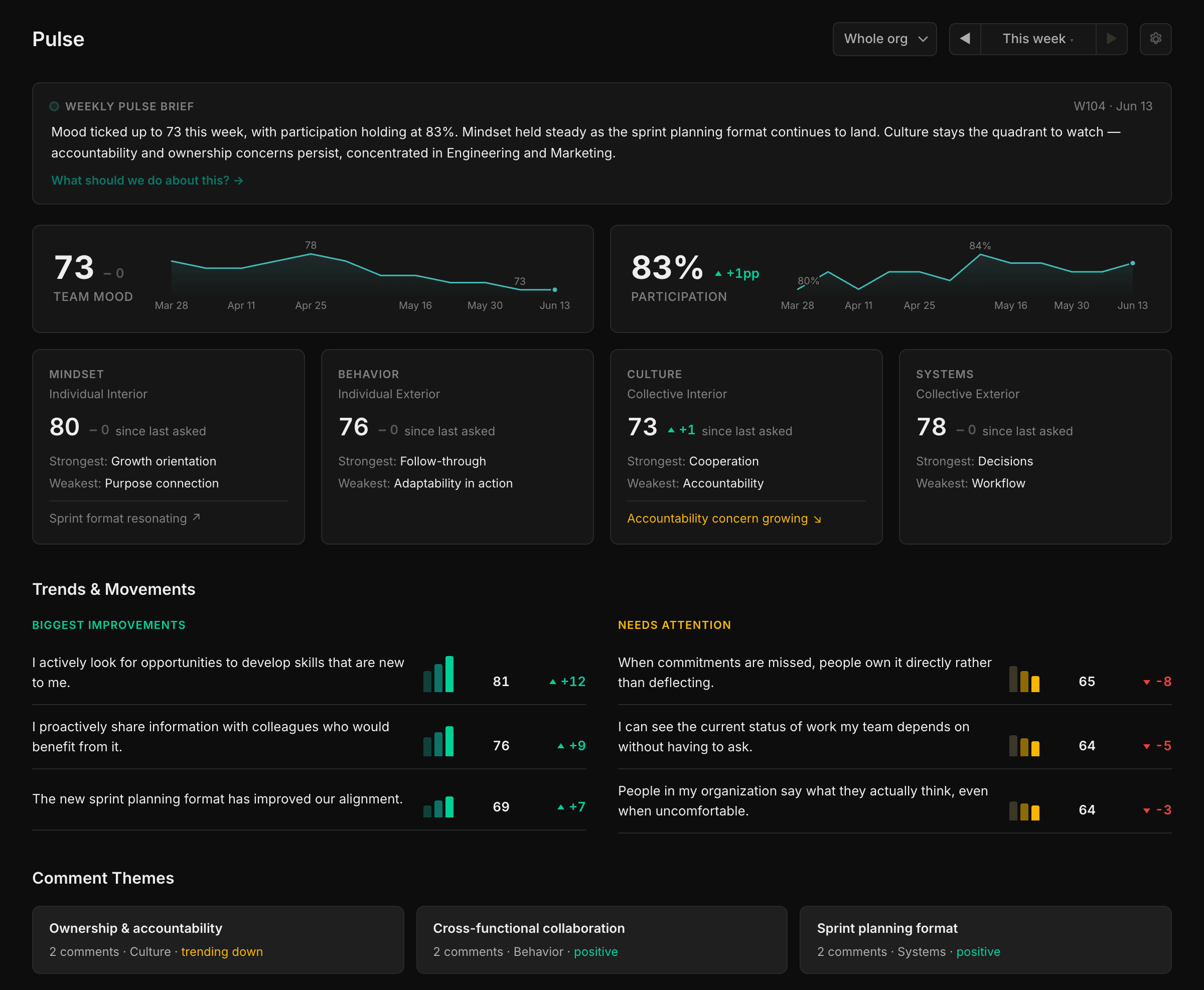
See how the organization works, from assessments, Pulse, employee voice and operational data.
See which pattern is creating the drag and decide what to develop this quarter.
Decision, meeting and collaboration patterns that teams build into their daily routines.
The software
Sense
Pulse turns assessments, employee voice, and operational signals into one live read on how the company decides, collaborates, and gets the work done.
Maturity Atlas · Change Lens · Network analysis
Explore Sense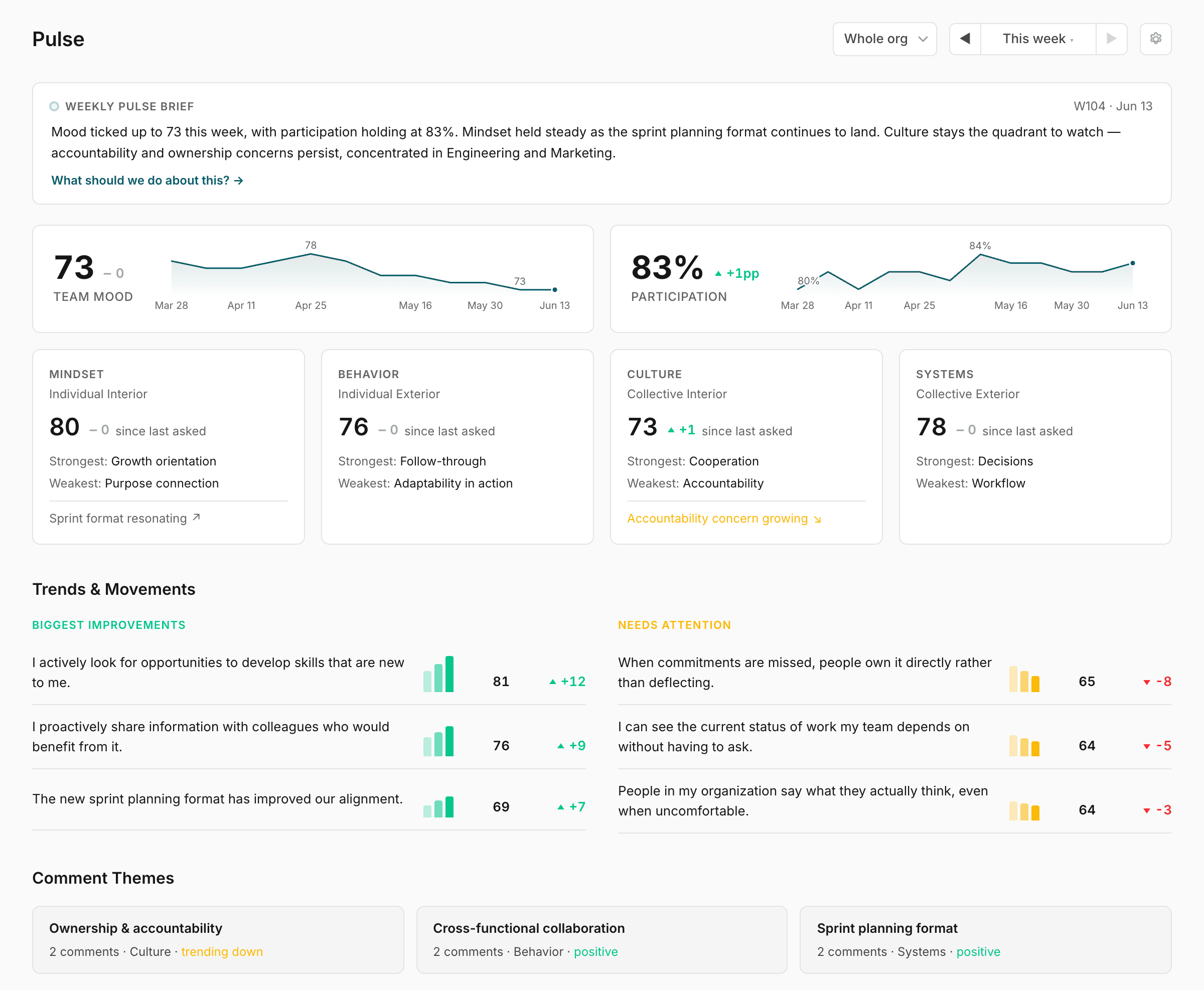
Shape
Applied Integral ranks where development would move the organization most and shows the projected impact of each, so the next move is clear.
Recommendations · Impact analysis
Explore ShapeMake It Stick
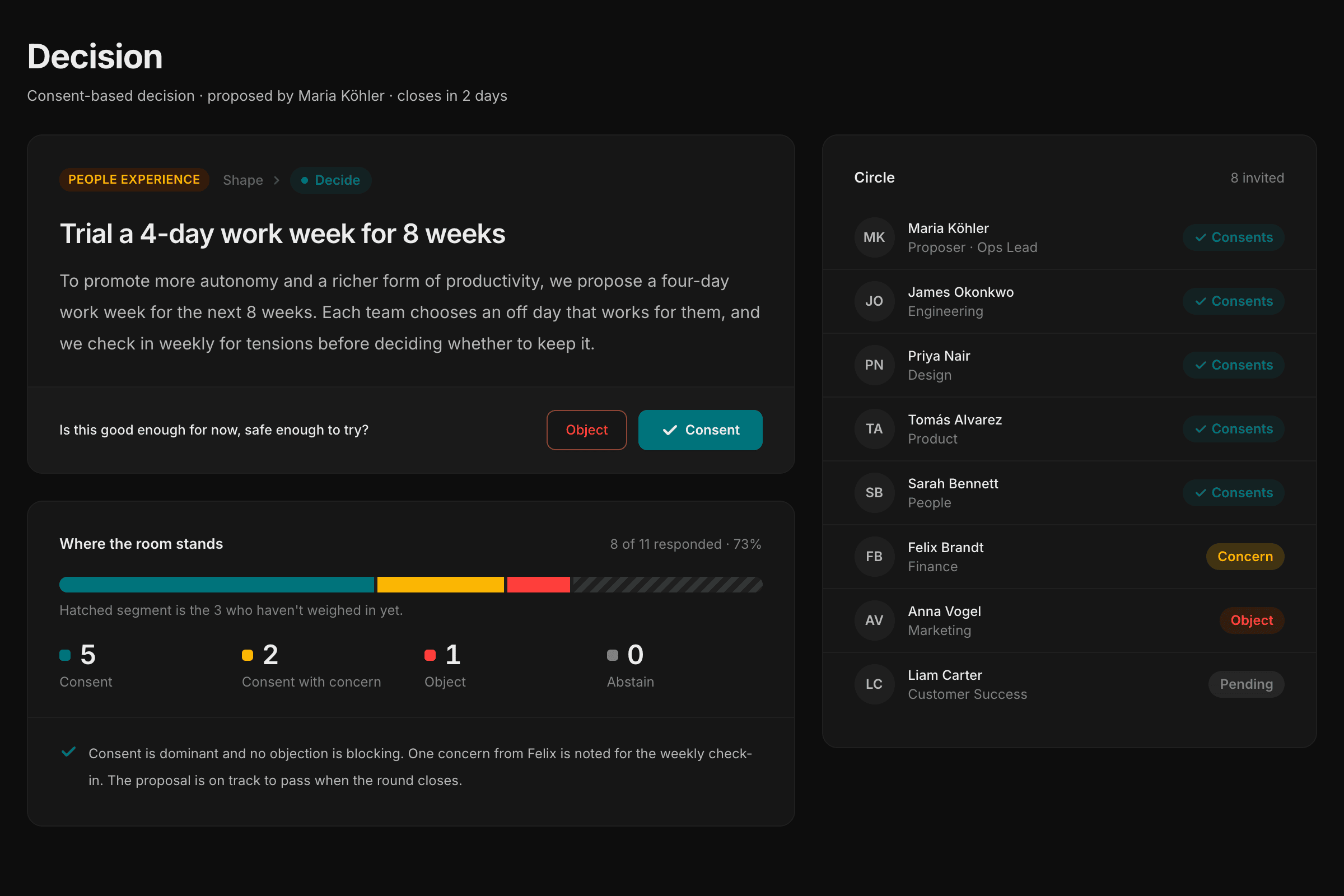
Development lasts when it lives in the operating tools: how decisions get made, how teams meet, how roles are defined. Applied Integral builds it into the daily routine.
Decisions · Meetings · Governance · Roles
Explore Make It Stick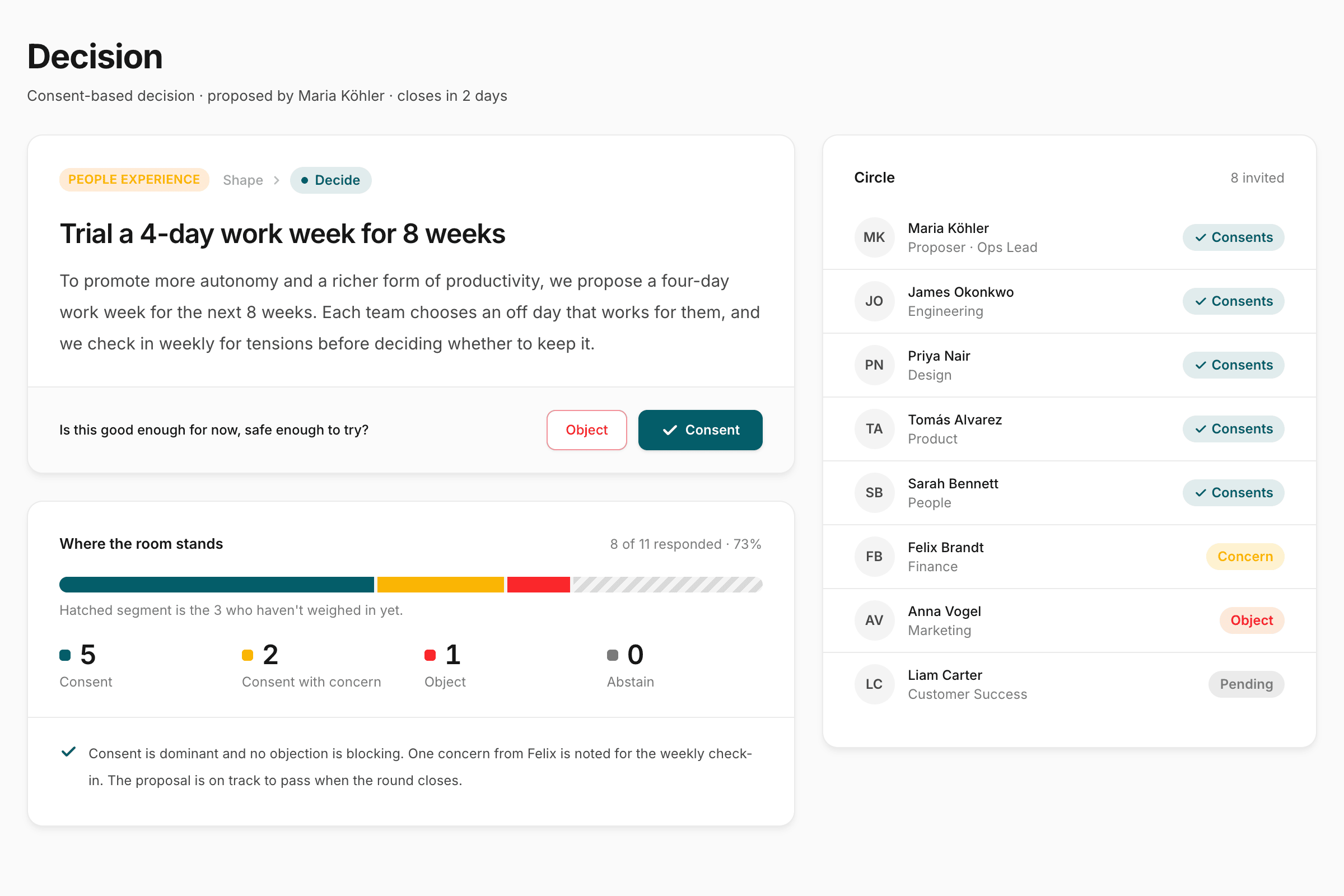
For leadership teams who own both the strategy and the organization that has to deliver on it.

What's new for your seat
The prize, for your company
10% of a €30.0M payroll, back in the business every year.
You set the assumptions. Recovery caps at the 21% Bain measures as total drag.
When it fits
Applied Integral is strongest when leadership knows the organization could operate at a higher level, but the next move is too systemic to solve with another isolated initiative.
The issue is the system carrying the work.
The initiative landed. Three months later, the old patterns were back.
Decisions, handoffs, and alignment now consume the energy meant for progress.
The team knows something is off but can't pin it down with enough precision to act.
Common questions
Applied Integral is the system for continuously developing your organization from within. It combines a methodology with software. The methodology gives leadership teams a shared way to understand how their organization works and what to develop next. The software makes it operational: continuous diagnostics, development recommendations, and tools that help teams run better decisions and governance in their daily work.
Organizations that believe how they work is a competitive advantage. Companies where leadership develops the organization with the same discipline they apply to strategy and financial performance. Where how people decide, collaborate, and govern the work is designed deliberately, not left to habit. These are often the most progressive companies in their industry when it comes to leadership, governance, and how they run the business. Applied Integral is the system they use to do it continuously.
It shows leadership teams how their organization works, and where it's getting in its own way. Where decisions slow down. Where coordination breaks. Where the culture and the structures pull in different directions. Then it recommends where development would have the most impact and gives teams the tools to act on it: better ways to run decisions, structure accountability, and organize collaboration. The picture updates continuously, so you can see whether things are actually improving.
Applied Integral builds a methodology and organizational development software. The methodology can be used by leadership teams and by practitioners working with their clients. The software is a paid product. For organizations that want hands-on support, Applied Integral works with a network of practitioners who use the methodology and software with their clients.
A self-developing organization can sense where it's stuck, decide what to develop next, and build the change into how the work gets done. Every team, all year, without waiting for the next transformation program. Building that capability is what Applied Integral is for. The clean test that you have it: you no longer need transformation programs.
By reading the whole system rather than one fragment of it. Applied Integral senses how your organization works, including where your own leadership team disagrees about reality, usually the first surprise. Then it recommends the highest-impact development in the sequence that fits your stage, because at every stage some moves work and some can't land yet. The output is the single highest-impact next move, with the operating tools to make it stick in daily decisions and governance.
Most tools measure how people feel and stop there. That's a thermometer: useful, but it only reads the temperature. Development also needs a map: what 'better' looks like, and which moves actually work at your organization's current stage. Organizations mature in a recognizable order across what people believe, how they behave, what the culture rewards, and how structures are built. A move that works at one stage won't take hold at another. Applied Integral makes that map operational, validated across more than 100 organizations, so leadership teams can see where they are and what genuinely develops them next.
Start with the diagnostic
The preview reads the patterns behind today's friction and shows whether Applied Integral is the right next step.